Thursday, November 3, 2016

Mee Mee – Joy of Parenting


The consumer of today are vigilant when it comes to baby care. They are ready to devote their time and effort to buy the best for their babies. This shift in consumer behaviour resulted in a surge of companies in the baby care segment. J & J was the undisputed leader in the baby care segment for years. Of late mothers and expecting mothers started thoughtful about their figure and subsequently product search also increased.

Retail giant Me n Moms launched its Mee Mee range of mother and baby care products in 2006. Since its inception, Mee Mee has been the pioneer of several trends in the parenting segment to ensure that more and more Indian mothers and their babies can experience the Joy of Parenting. They have the whole array of baby care products which includes Baby Bath time, Baby Bed Time, Baby Care, Baby Dress Up Time, Baby Play Time, Furniture & Travel, Nursing & Feeding. Thus it caters to the different occasions of the baby’s life (read mostly daily life). These products are also segmented based on demography i.e. age. Mee Mee products are available for age group 0 – 7 years which is different from competition. Yet another segment they cater to is the mother care viz. For Moms.
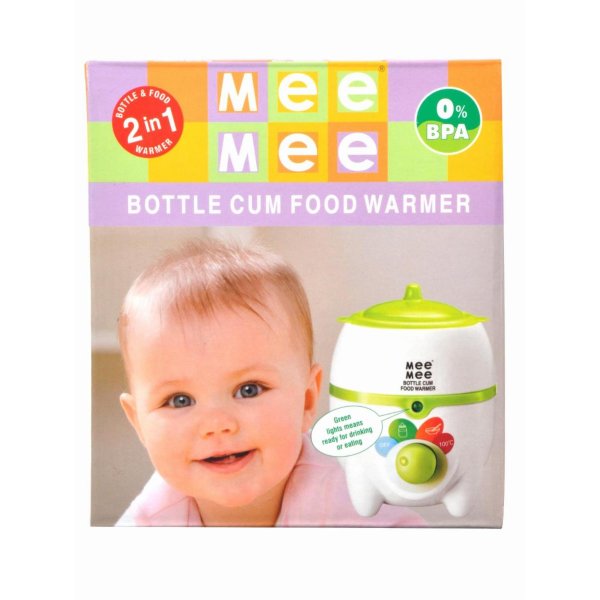
The inflection point to me is that no brand delivers this variety in baby care and mother care segment. Even though Mee Mee tells it is a premium offering, the pricing is par with competition. Recently  Himalaya launched "Himalaya for Moms" but the product range never matches with Mee Mee.

Since the baby and mother care segment is growing multi- fold, coupled with the absence of entry barriers more new players may follow the path of Mee Mee and try to catch a pie of the segment.

Wednesday, November 2, 2016

Indian Coffee House – The Starbucks of the bygone epoch


A coffee coupled with a cutlet (with signature beetroot inside) is a yummy combination for a Keralite. It is easy to spot a Keralite anywhere in India as he will be searching for an ICH first (even though its presence is limited to few regions across India). Talk to anyone in the bygone era they will have a lot reminiscence about ICH. Even years before the launch of CafĂ© Coffee Day or the Starbucks, ICH brought in coffee culture in India. 

The Indian Coffee House chain commenced as a small outlet by the Coffee Cess Committee in 1936. The first outlet opened in Mumbai and by the 1940s almost 50 Coffee Houses had opened up all over British India. During the 1950s some changes in policies came around and the board had to shut down the Coffee Houses. But later communist leader A. K. Gopalan along with workers of the Coffee Board formed the Indian Coffee Workers' Co-operatives and re-started the chain as Indian Coffee House. The same started in Bangalore on 19 August 1957 along with other parts of the country.


Every ICH outlets have a lot to cherish up on. It was really a Starbucks of the past. You have a sip of coffee blended with chicory and hang on there for hours. The attender with a turban will treat you well regardless of your order. The coffee house friends meet daily and have heated discussions on politics, movies, society and what not. In fact crucial life decisions are taken during such gatherings. Thus ICH as brand is not positioned as a hotel but as a hangout place for people. ICH seldom looks modern but it gives energy to all who loves it. The ICH brand delivers the brand promise and the trust people have in the brand is unparalleled. 

But are ICH relevant today to the new generation? Even though people prefer ICH, one has to agree that it has lost its charm to the Café Coffee Day, Barista etc. This has resulted in closure of a few ICH outlets. Will ICH remain as Starbucks or Star(ve)bucks(starving for money)?

Wednesday, October 26, 2016

Pulse – The Pulse of India


Raw mango pieces filled with chilli powder and salt always activate our taste buds and we under no circumstances stop eating it. This habit is fairly common across India. It always pumps in a fresh energy in you. Raw mango sellers are very common in the roadsides of India. But can we carry a raw mango always? What if a candy serves the purpose?
Pulse, launched in February 2015 by DS group is an innovation in the candy space. Even though brands like Candyman, Alpenliebe, and Cadbury Chocoliars are present in the Hard – Cooked Candy (HBC)category, powder- filled candy is a clear distinction. Pulse has this tangy taste that a customer expects. The two variants of Pulse Kaccha Aam (26 per cent) and Mango flavour (24 per cent) together claim 50 per cent share in the HBC market.   
Since raw mangoes are consumed by people of all age groups cutting across geography, it has been launched for a mass market rather than for a specific segment. Concurrently, it is treated as an anywhere, anytime candy.
The price was also fixed higher for Pulse. While all the other candy at that time was charged 0.5 paise, Pulse was available only for Rs. 1 with a slight increase in weight (4 Grams for per candy). Thus a value – proposition is also painted.  The positioning is based on experience of eating. All the other candy have a uniform experience while Pulse gives a perfect balance of sweet and tangy flavour(Named as Masala Bomb).
The brand communication was given later which also aligns with the brand promise. My take is that innovation is the core of success for any brand even if it is a candy. The biggest challenge is that they have competition not only from Parle Kaccha Mango Bite but also from cheap imitations.